
A First Look at King Tutankhamun’s Full Treasures
The long-awaited Grand Egyptian Museum (GEM), located near the Giza Pyramids, has finally opened its doors, marking one of the most momentous cultural events in modern history. For the first time ever, the complete collection of Tutankhamun’s treasures — including artifacts from his tomb — are being displayed together under one roof.
This historic moment celebrates more than a century of fascination with ancient Egypt’s most famous pharaoh and promises to redefine global heritage tourism.
A Monumental Opening After Years of Anticipation
After nearly two decades of planning, design, and meticulous construction, the Grand Egyptian Museum now stands as a testament to Egypt’s enduring legacy. Originally conceived in 2002 and delayed multiple times due to political and economic challenges, the museum’s opening in 2025 marks a new era in Egyptology.
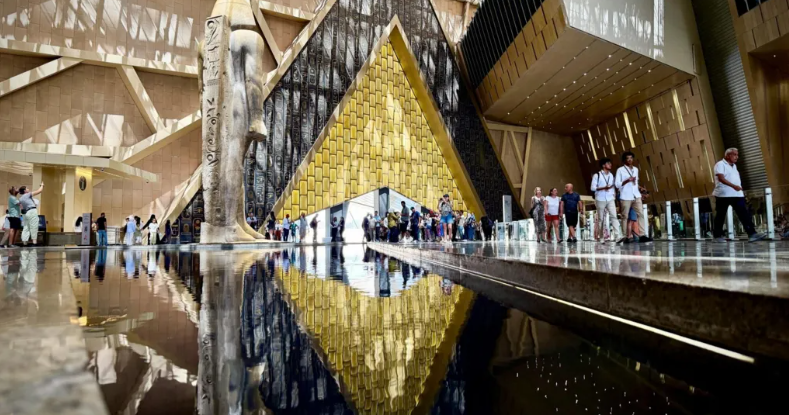
Located just two kilometers from the Great Pyramids of Giza, the museum spans over 480,000 square meters — making it the largest archaeological museum complex in the world. Its modern architecture, designed by the Dublin-based firm Heneghan Peng, harmoniously blends ancient grandeur with contemporary elegance, creating a gateway between Egypt’s glorious past and its dynamic present.
The Complete Tutankhamun Collection on Display
The centerpiece of the museum’s debut is the full exhibition of King Tutankhamun’s tomb, displayed entirely for the first time since its discovery by Howard Carter in 1922. Over 5,000 artifacts from the young pharaoh’s burial site have been meticulously conserved and arranged to reflect their original placement in the Valley of the Kings.
Visitors can now explore the golden sarcophagus, the iconic funerary mask, jewelry, chariots, and ritual objects — each offering a window into the craftsmanship, beliefs, and daily life of ancient Egypt’s 18th dynasty. The exhibition provides an unprecedented, immersive experience that brings Tutankhamun’s story to life, from his coronation to his mysterious death and eternal afterlife.
Architectural Wonder and Design Innovation
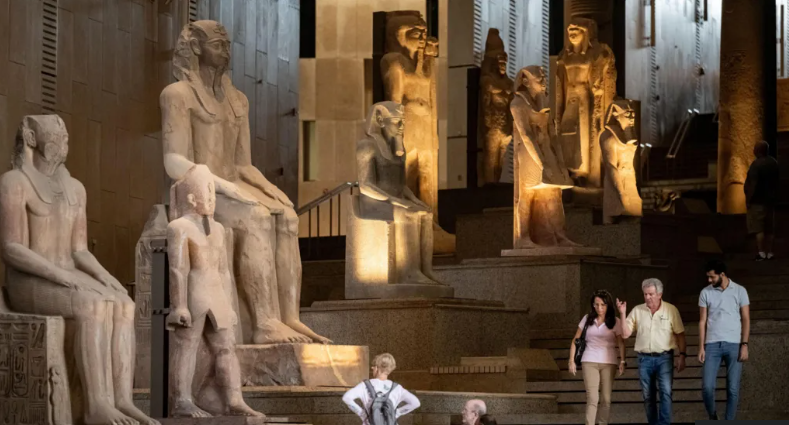
The Grand Egyptian Museum itself is an architectural masterpiece. Its translucent alabaster façade glows warmly under the Egyptian sun, symbolizing the eternal light of ancient civilization. Inside, vast galleries and suspended walkways overlook breathtaking displays, while the main atrium houses a colossal statue of Ramses II, welcoming visitors with regal grandeur.
The museum’s design embraces the concept of alignment with the Giza Plateau, ensuring that from certain vantage points, the Great Pyramid of Khufu can be seen perfectly framed through the museum’s glass walls. This deliberate alignment bridges Egypt’s ancient engineering genius with modern architectural sophistication.
Preservation Meets Technology: A New Era for Egyptology
Beyond its aesthetic brilliance, the GEM integrates cutting-edge technology to preserve and interpret Egypt’s archaeological treasures. Advanced climate-controlled environments, 3D scanning, and digital archiving ensure that delicate relics remain protected for future generations.
Interactive displays, augmented reality reconstructions, and multilingual virtual tours allow visitors to delve deeper into Egypt’s rich narrative. This combination of science, art, and technology transforms the museum into a global research and educational hub, setting new standards for museum curation worldwide.
A Global Cultural Landmark
The Grand Egyptian Museum is more than just a building — it is a cultural revival project that repositions Egypt at the center of world heritage tourism. With over 100,000 artifacts spanning from prehistoric times to the Greco-Roman era, the museum showcases Egypt’s evolution as a civilization that influenced art, science, governance, and spirituality across millennia.
Egyptian officials project that the GEM will attract millions of visitors annually, revitalizing tourism and the national economy. Its strategic location near the Giza Pyramids complex allows for seamless integration into Egypt’s most iconic destination, offering tourists a comprehensive and awe-inspiring journey through time.
The Legacy of Tutankhamun: A Century of Fascination
Since Howard Carter’s groundbreaking discovery in 1922, Tutankhamun has captivated the world’s imagination. The discovery of his nearly intact tomb — filled with golden treasures — sparked what became known as the “Tutmania” phenomenon, influencing fashion, art, and pop culture for decades.
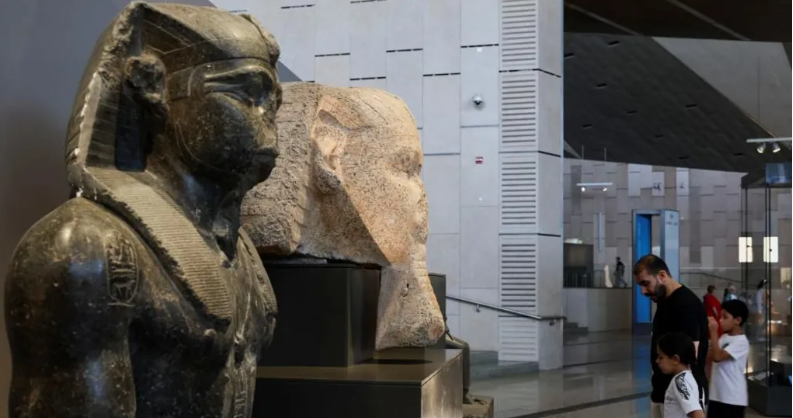
The new display at the GEM goes beyond mere exhibition; it tells the story of a boy king whose brief reign left an indelible mark on world history. Through meticulously curated galleries, the museum unveils the spiritual and political significance of Tutankhamun’s reign, connecting the past with the present through objects that embody Egypt’s eternal quest for immortality.
Collaborations and International Contributions
The success of the Grand Egyptian Museum project owes much to global collaboration. Countries including Japan, the United States, and members of the European Union have contributed funding, technology, and expertise to support the museum’s completion. The Japan International Cooperation Agency (JICA) played a pivotal role in financing and training conservators, while international teams worked side-by-side with Egyptian archaeologists to ensure authenticity and precision in artifact restoration.
These partnerships highlight Egypt’s commitment to cultural diplomacy, strengthening ties through shared respect for humanity’s collective heritage.
A Vision for the Future of Archaeology and Tourism
The GEM is not just a museum; it’s an epicenter for future archaeological research. Its state-of-the-art laboratories will facilitate restoration, study, and documentation of newly discovered artifacts from ongoing excavations across Egypt. Scholars from around the world are expected to collaborate here, advancing the understanding of ancient Egypt through science and innovation.
Moreover, the museum’s grand opening signals a renewed commitment to sustainable tourism. By managing visitor flow between the GEM, Giza Plateau, and other archaeological sites, Egypt aims to protect its monuments while enhancing the visitor experience. This aligns with Egypt’s broader vision for Vision 2030, promoting cultural preservation alongside economic growth.
Global Enthusiasm and Historical Impact
The global response to the museum’s opening has been overwhelming. Historians, archaeologists, and travelers alike view this event as a milestone in human history — comparable to the discovery of the Rosetta Stone or the decipherment of hieroglyphs. The Grand Egyptian Museum redefines how the world experiences ancient history, turning Egypt into a living classroom where the past breathes anew.
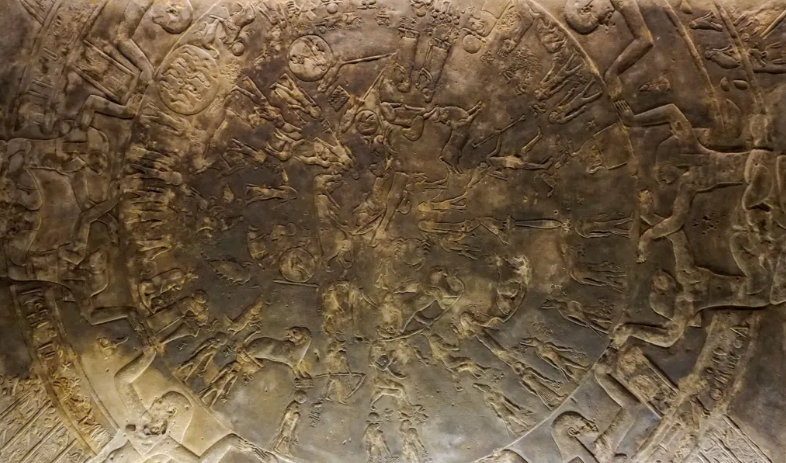
From royal relics to architectural splendor, every aspect of the GEM underscores Egypt’s role as the cradle of civilization. As visitors walk through the halls, they are not merely observing artifacts — they are witnessing eternity, preserved in gold, stone, and spirit.
A Timeless Tribute to Humanity’s Heritage
The opening of Egypt’s Grand Museum and the full exhibition of Tutankhamun’s tomb represent more than a cultural event — they mark a resurgence of global fascination with ancient Egypt. With its breathtaking architecture, groundbreaking conservation, and immersive storytelling, the GEM invites the world to rediscover a civilization that continues to shape human identity thousands of years later.
As Egypt opens this monumental chapter, the Grand Egyptian Museum stands as a timeless bridge between antiquity and modernity, a celebration of art, history, and the enduring human spirit.
